Spacies browser
See the detailed sheet

Underground hydrosystems (open aquifers, underflows of watercourses, etc.) exert strong constraints on the organisms that live there.
Indeed, due to the absence of light, primary production is almost non-existent: nutritional resources are therefore limited. Furthermore, in the absence of photosynthesis, oxygen is present in much lower quantities than at the surface.
To adapt to this initially hostile environment, organisms have developed morphological, physiological, and behavioral adaptations.
Stygobitic animals all share common characteristics of adaptation to underground life:
These organisms are also capable of consuming all types of nutritional resources available to them (organic debris of animal or plant origin from the surface, microbial biofilms, etc.).
They thus play a little-known but important role in the purification and detoxification of water, actively contributing to the preservation of groundwater quality.
Despite a living environment with multiple constraints, underground aquatic fauna exhibits a great disparity of forms and an astonishing diversity of species.
In France, it does not include vertebrates, but all major groups of invertebrates are represented: crustaceans, insects, arachnids, myriapods, mollusks, annelids, etc., not to mention protists and bacteria that live freely in planktonic form or grouped as biofilms.
To date, some 7,000 stygobitic species have been identified worldwide, and nearly 400 in France alone.
At all scales, stygofauna is dominated by the crustacean group and, to a lesser extent, by mollusks and then annelids. There are also “living fossils” whose presence is explained by the maintenance over very long periods (on the order of a million years) of a buffered living environment and constant micro-climatic conditions.

The diversity of species in underground habitats can be explained by the fact that predators are far less abundant there than in surface habitats. Furthermore, speciation—the process by which new species appear—is high in these environments due to their extreme fragmentation (little or no connectivity between watersheds), which favors the isolation of populations.
Underground aquatic environments are thus considered to be the type of habitat harboring the most endemic species, and approximately 70% of French stygofauna is not recorded outside of France!
Because they have developed specific adaptations in response to environmental constraints, stygobitic species are hyperspecialized and therefore particularly sensitive to the slightest environmental disturbance. More than half of French species are classified as vulnerable on the Red Lists of the International Union for Conservation of Nature (IUCN).
The origin of the name “stygofauna” refers to the Styx, the main river that crossed the underworld in Greek mythology.
Stygofauna, which is very sensitive to water quality and temperature variations in its living environments—usually very stable throughout the year—should constitute an excellent indicator of the quality and proper functioning of underground hydrosystems.
Furthermore, this biological indicator would complement the chemical-only approach currently used to define the good status of these environments.
However, while research into bio-indication is currently in full development, it has not yet resulted in the creation of an “underground IBGN (Standardized Global Biological Index).”
The availability, at the end of phase 2 of the study program, of a very substantial database in terms of the number of sites (over 350 in total for Nouvelle-Aquitaine) should make it possible to increase the resolution of the statistical tests applied (multivariate analyses among others) and to conclude on the possibility of using stygofauna for bio-indication (or conversely, its non-applicability).
A bio-indicator (or biological indicator) is an organism or a group of organisms that allows for the characterization of the state and/or functioning of the ecosystem in which it lives and highlights its natural or induced modifications.
For example, diatoms, macrophytes, macro-invertebrates, and fish are excellent indicators of surface water quality. Similarly, lichens, which have a specific sensitivity to certain pollutants, are used for the bio-monitoring of air quality and atmospheric pollution.
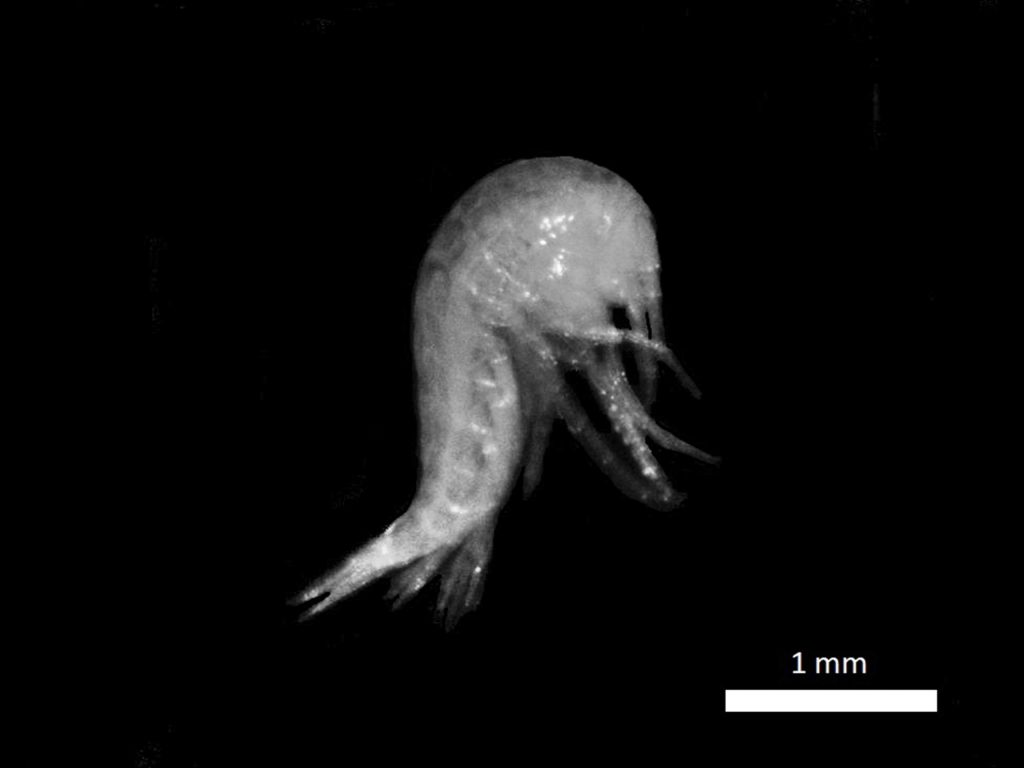
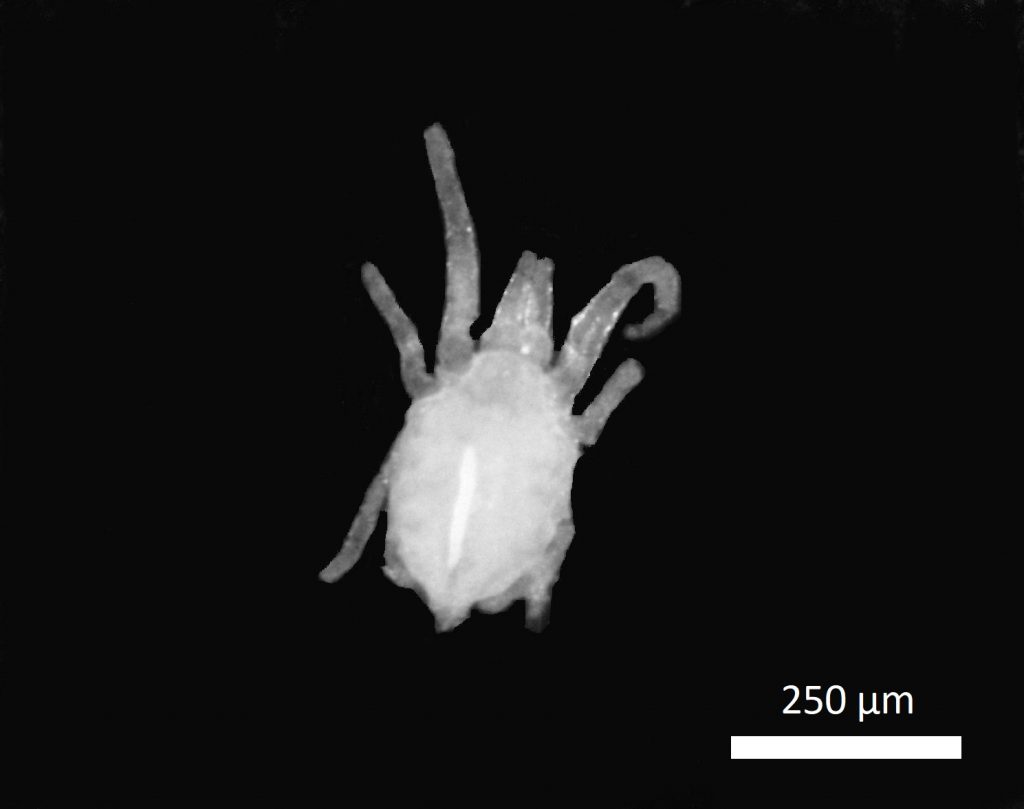
A tiny crustacean of underground waters, the Gallaselle is today one of the most emblematic stygobitic species.
Discovered in 1955 in an underground river in a commune of Deux-Sèvres, the Gallaselle was officially described in 1956 and named Asellus heilyi.
It was studied again in the 1970s and placed in a new taxonomic genus, Gallasellus, to highlight its unique character in France and Europe and to differentiate it from North American species with which it shares a genetic background.
Until 2012 and the program “Study and protection of gallaselles and their underground aquatic habitats in Poitou-Charentes“, it had only been the subject of rare observations, almost always in Poitou-Charentes, making the Gallaselle an endemic species for the region.
Due to its distribution area restricted to the greater central-western part of France, the Gallaselle is of primary scientific and heritage interest.
Classified as “Vulnerable” on the National Red List of threatened species in France, its preservation and the protection of its living environment represent important challenges for national biodiversity protection.
A species is said to be “endemic” when it is found only in a given biogeographical area, generally of small extent.
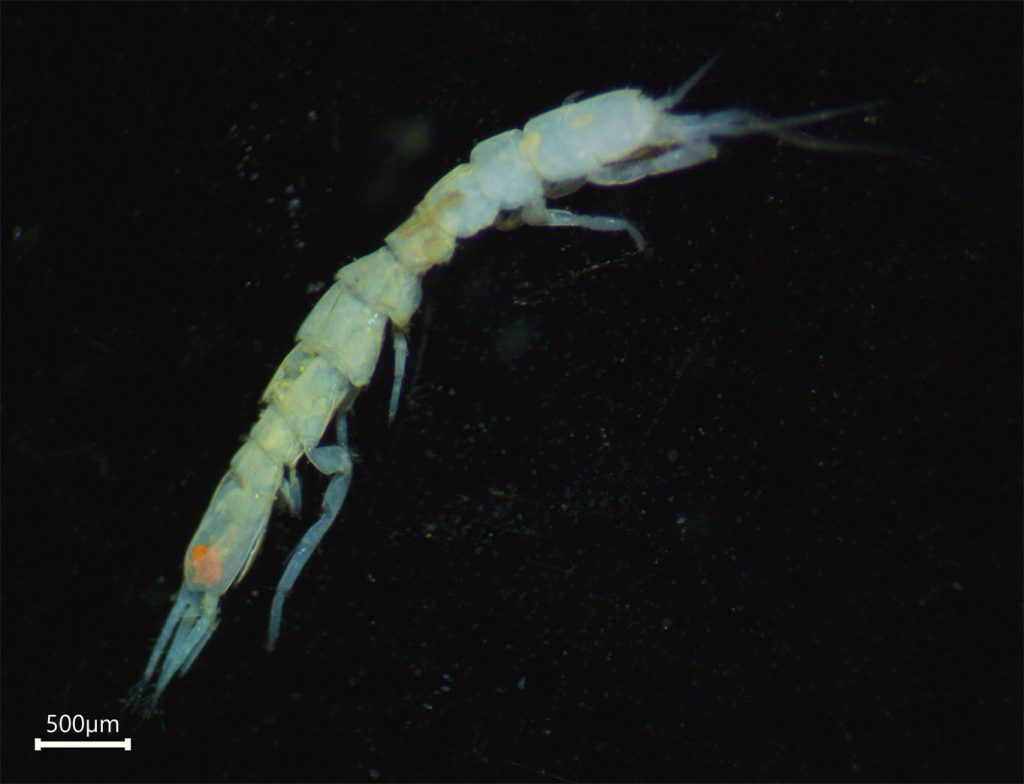
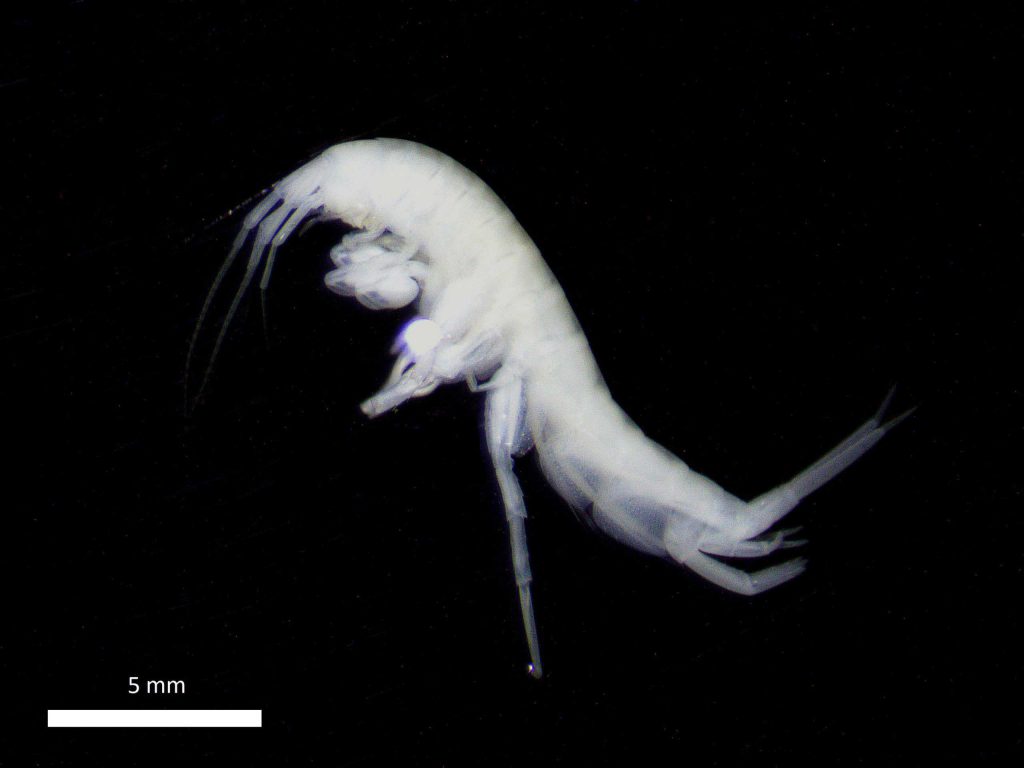
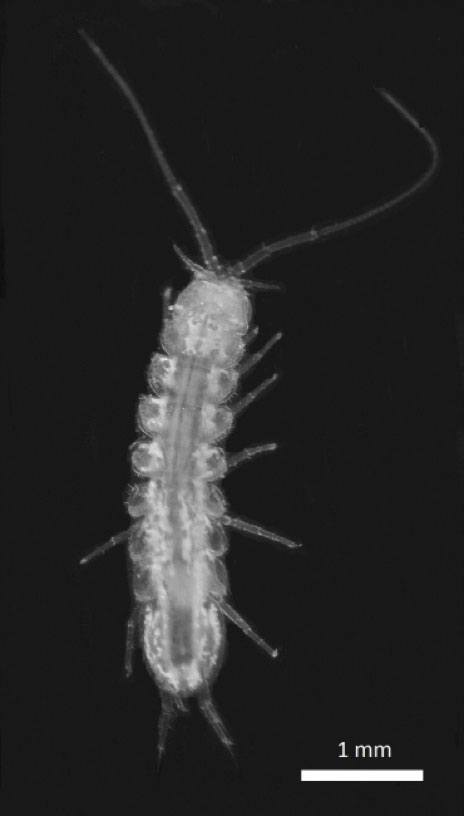
A crustacean of the genus Stenasellus was recently identified in a collection dated 2022-08-17 from the Bassac underground stream (Beauregard-et-Bassac, Dordogne), a first within the framework of our inventory, which has already covered the former regions of Poitou-Charentes and Limousin.
It is a small isopod crustacean (in this case a young male of 4-5 mm, see photo), therefore stygobitic (completely blind and depigmented), whose species-level identification still requires further genetic analysis (det. F. Malard and C. Douady, University of Lyon 1).
Three species of stenasellids (one of which includes 4 subspecies) are currently known and described in France, with an essentially southern distribution (southern Massif Central, Pyrenean fringe, Mediterranean rim, Corsica).