
Sampling equipment and protocols
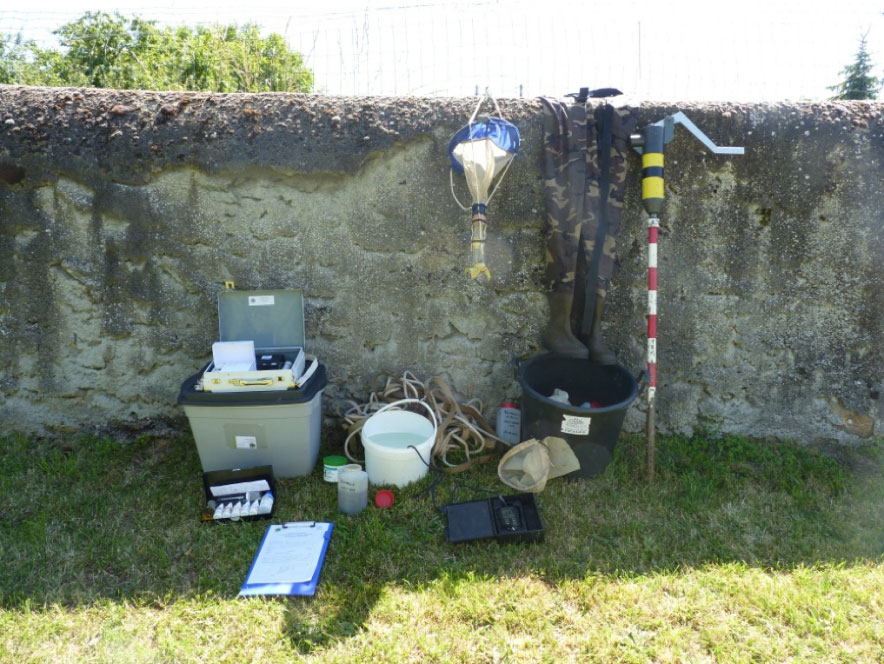
Sampling equipment
To collect the samples used to assess the aquatic fauna present at each site, specialised equipment and technical methods have been implemented.
Depending on the type of habitat surveyed, different sampling devices are used:
- hand net,
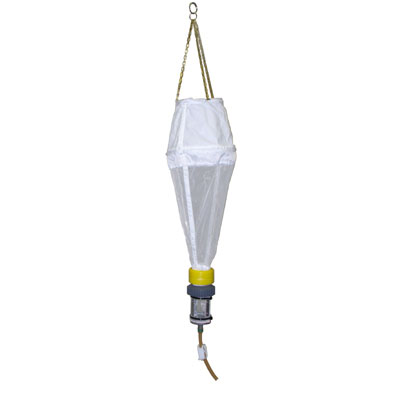
- Cvetkov net or phreatobiological net,
- wide-opening net,
- Bou-Rouch probe/pump,
- surface pump
In all cases, the mesh size of the nets and filtration sieves is less than or equal to 250 microns, fine enough to capture the target stygobiotic species.
Sampling protocols
Sampling procedures comply with the European Standard Protocol, developed during the PASCALIS programme and coordinated, among others, by the LEHNA team (see MALARD et al., 2002).
Springs
For springs, the protocol must be adapted to the outlet facies, ensuring sampling at the most upstream and darkest physically accessible point, using a:
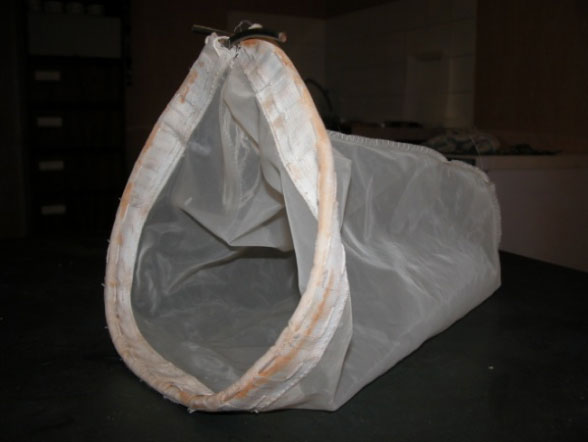
- “hand net” used as a filtering trap, positioned (like a Surber net) across a water flow, if it is strong enough (rheotic facies) to carry in elements put into suspension upstream by scraping/stirring the substrate;
- “hand net” used as a sieve and fed with substrate samples, if the water flow is weak (lentic facies), diffuse, or the water volume is very large (specifically when a “spring eye” cannot be distinguished or accessed).
Groundwater
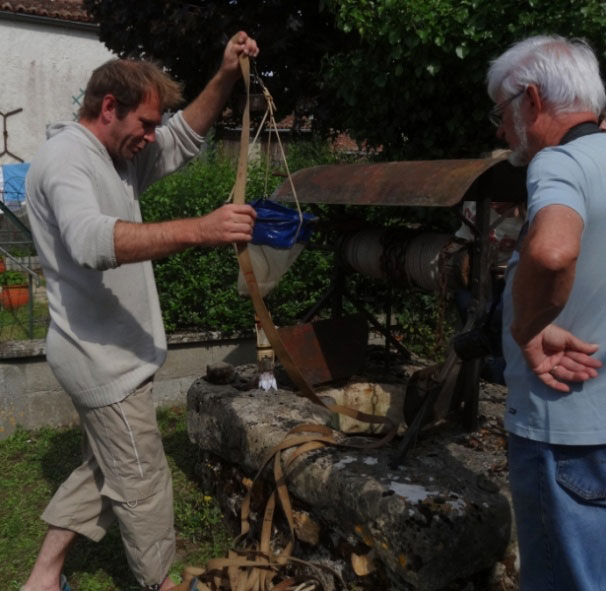
For groundwater, sampling is typically carried out from above:
- using a phreatobiological net (Cvetkov-type net) fitted with a rope of variable length; appropriate handling allows the water column to be stirred/filtered, thereby suspending and filtering fauna likely to rest on the bottom and walls.
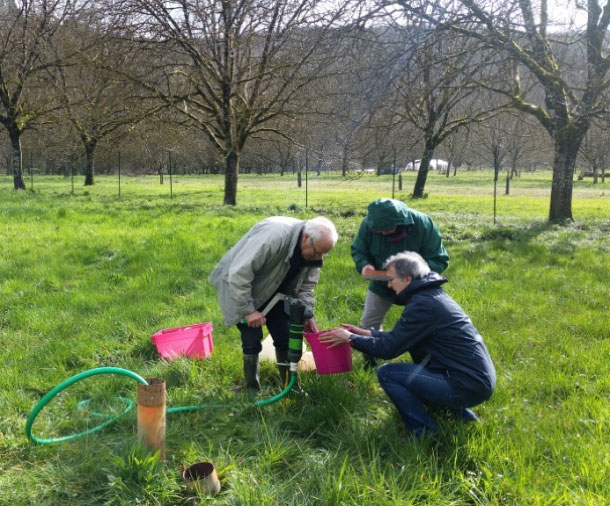
- by pumping from a piezometer using a manual surface pump (the same type of pump as that used with the Bou-Rouch probe), connected to a flexible hose (30 mm external diameter) ending in a screened section. The hose is lowered to the bottom of the piezometer in order to collect the bottom sediments where the target organisms are found, rather than those only present in the water column.
Underground rivers
For underground rivers, the sampling methodology consists of placing a:
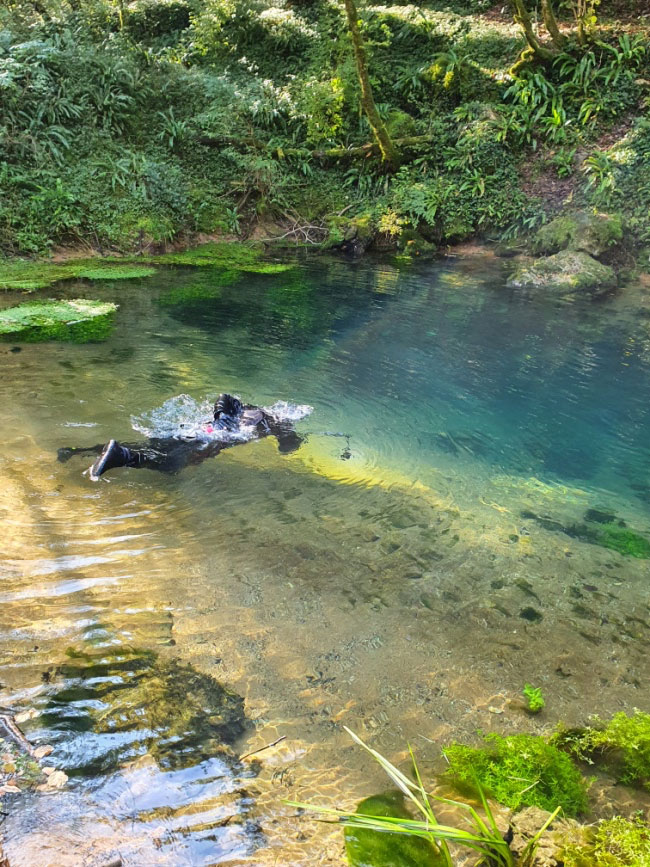
- hand net positioned across the water flow (like a Surber net in a rheotic environment), in front of which the surface of the sediment or any living substrates present in the streambed (stones, rocks, dead wood, etc.) are stirred.
Surface watercourses
In the bed of surface watercourses, sampling is carried out using a:
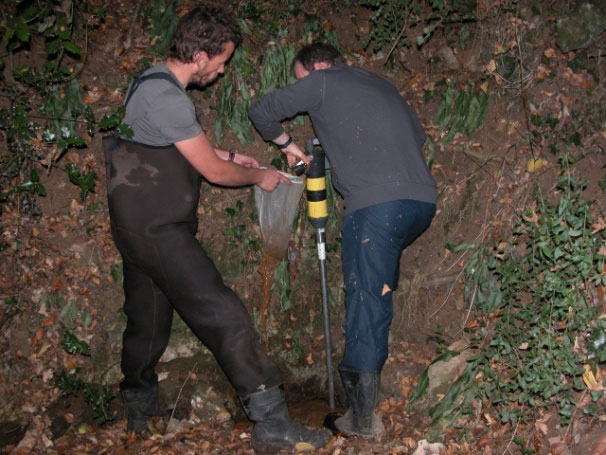
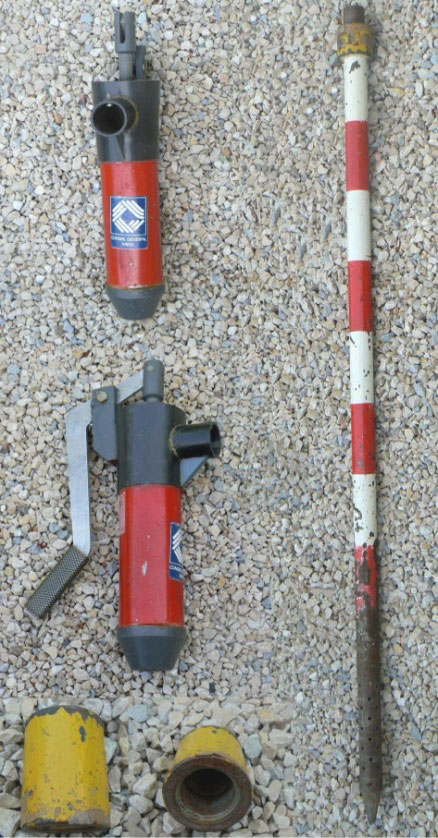
- probe/pump (Bou-Rouch type), operated by driving a screened metal tube deep into the substrate (20–120 cm), drawing water using a pump mounted on the other end, and then filtering the sample at the pump outlet.
Are other sampling methods used?
As soon as conditions allow (immersion in an underground or near-dark environment, with no prior disturbance of the habitat), in addition to the sampling methods mentioned above, it is possible to carry out “visual” collection (with the naked eye or a magnifying glass) by carefully observing the substrate walls and all living supports present (dead wood, stones, etc.).
Field measurements and data collection
Physico-chemical analyses
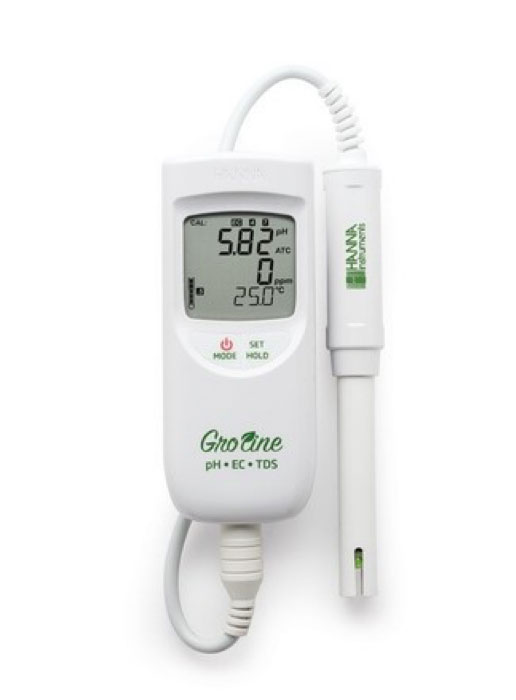
Before each sampling event, the physico-chemical parameters of temperature (T°), acidity (pH) and electrical conductivity (Ev) are measured on site (as close as possible to mid-depth in the water column) using a field multi-parameter probe.
A large volume of water is collected (always as close as possible to mid-depth in the water column) in order to measure, using field kits, the parameters of dissolved oxygen (O2), ammonium (NH4+), phosphate (PO43-), calcium carbonate (CaCo3), sulfate (SO42-), nitrate (NO32-) and nitrite (NO2–).
A 1 L water sample will be set aside and stored in a bottle (double-capped and labelled) so that the recorded measurements can be checked later, if necessary.
Preservation, sorting & identification of samples
After filtration, the sampling residue is placed in a medium-capacity bottle (200 to 500 ml, double-capped and labelled) and immediately fixed on site by adding 99.9% alcohol in sufficient quantity (after dilution) to obtain a preservation solution of at least 70% alcohol.
After sorting under a stereomicroscope, specimens are stored by major taxonomic groups in 2 ml microtubes designed for long-term preservation (O-ring seal), labelled inside and out, and completely filled with 99.9% alcohol.
Midway through and at the end of sampling, they are then sent for confirmation/identification to the taxonomic experts associated with the study programme.
Please note that once removed from their environment, all specimens must be preserved in a solution of ≥ 70% alcohol; otherwise their DNA molecules may degrade, compromising subsequent genetic (sequencing) analyses.
Data recording
In parallel with sampling, a field “Sampling Sheet” is completed for each site, in order to immediately record, in addition to the measured physico-chemical water parameters, the sampling conditions and the main characteristics of the sampling point, as well as a faunal and floral survey of the immediate surroundings.
The information collected on site is used, among other things, to produce a “Topo Sheet” for each site, which brings together data on:
- toponymy,
- topography,
- geolocation,
- geology-hydrogeology,
- as well as historical and heritage data,
- and a photographic illustration of the site.
Data relating to the identification of the collected aquatic fauna are recorded in a “Sorting & Identification Sheet” which, in addition to the counts for each major identified taxon, reproduces the working photographs taken under the microscope and assigns each site and each specimen a unique preservation code.


